

Malaysia's roads are a joy for most of the year, but the northeast monsoon changes the rules. It runs from November to February, with the heaviest rain usually between December and January. If you have a rental car booked in this window, a little preparation makes the difference between a memorable road trip and a stressful one. This guide covers where the monsoon hits hardest, how to drive in heavy rain, what to do about flash floods, and how to choose the right car and itinerary.
Know Where the Monsoon Hits
The northeast monsoon mainly affects the east coast: Terengganu, Kelantan and Pahang. Rough seas and heavy rain are common, and the island resorts and ferries serving Perhentian, Redang, Lang Tengah and Tenggol typically shut from roughly early November to late February or early March. Flooding on the east coast is most likely in this window.
The west coast tells a different story. From November to April it is at its driest, which makes Penang, Langkawi, Ipoh and the Klang Valley comfortable choices for a road trip. Langkawi and Penang do not close for a season, and their wetter months come with the southwest monsoon later in the year. Outside November to February, the east coast is open and in peak season from March to October, so there is no need to avoid it for the rest of the year.

Driving Safely in Heavy Rain
Tropical downpours can cut visibility within minutes. A few habits go a long way:
- Slow down and increase your gap. Wet roads need much longer stopping distances. Leave at least double the usual space.
- Use dipped headlights and wipers. Turn on your headlights so others can see you. Hazard lights are best kept for when you are stopped, not while moving.
- Avoid sudden braking or steering. Smooth inputs reduce the risk of skidding or aquaplaning.
- Pull over safely if you cannot see. If the rain is too heavy, stop at a petrol station or rest area rather than on the highway shoulder.
- Watch for fallen branches and standing water on kampung roads and coastal routes.
Check that your rental has working wipers and decent tyre tread when you collect it, and let the operator know straight away if anything looks off. Remember that the exact unit is assigned at pick-up, so a quick walk-around is worthwhile.
Flash Floods: What to Do
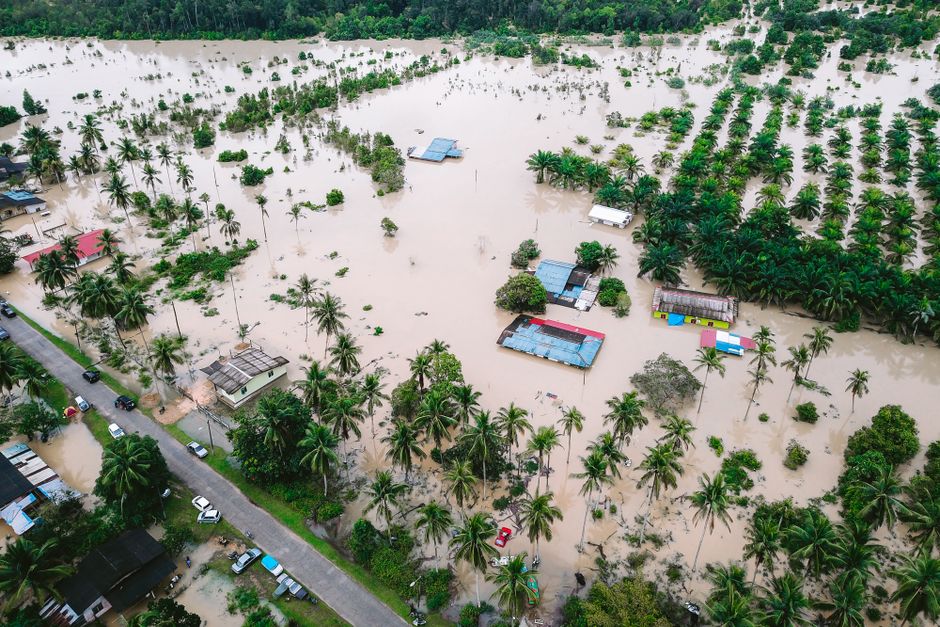
Flash floods can build quickly, especially in low-lying towns and near rivers. The single most important rule is simple: never drive into floodwater. It is very hard to judge depth or whether the road beneath is still intact, and even shallow moving water can damage a car or sweep it away.
- Check weather warnings from the Malaysian Meteorological Department (MET Malaysia) and local road updates before each driving day.
- If a road ahead is flooded, turn around and find another route, or wait for it to clear.
- Do not park in low-lying areas or near rivers overnight during heavy rain.
- If water is rising around a stationary car, leave the vehicle and move to higher ground.
- Contact the rental operator as soon as it is safe so they know the situation.
Be mindful that damage claims are handled between you and the operator, and operators set their own terms. Read the Important Notes section on your listing before booking, and note that MT Car Rentals does not offer CDW; if you want extra cover, arrange it through a third-party provider.
Planning East Coast Trips Around the Rain
If your plans include the east coast between November and February, build in flexibility. Keep your itinerary loose, avoid tight deadlines such as same-day flights after a long drive, and have a backup indoor plan.
Our service is area-based: you may return the car to any location within the same area as your pick-up, but not to a location in a different area. That means one-way trips between regions are not possible, so plan loops that start and end in the same area.
In Kota Bharu, pick-up locations include Kota Bharu Airport and Kota Bharu Bus Terminal. Compact cars start from RM90/day, MPVs from RM150/day, and 4x4 options from RM700/day. In Kuala Terengganu, you can choose Kuala Terengganu Airport and the Kuala Terengganu Bus Terminal. Compact cars start from RM90/day, MPVs from RM120/day, and SUVs and 4x4s from RM500/day. Prices vary by date and listing, so always check the live rate on the website.
Also note that Cameron Highlands is not a served area on our platform, and cross-border trips into Thailand are not permitted. Some listings restrict certain mountain routes, so check each listing's Important Notes.
Choosing the Right Rental for Wet Weather
You do not need a rugged vehicle for most monsoon driving, but a few considerations help:
- Compact cars such as the Perodua Axia and Myvi are easy to handle and economical for city and highway driving.
- SUVs and MPVs offer higher ground clearance and more space for luggage and family, which is helpful on rural roads.
- 4x4 pick-ups such as the Mitsubishi Triton or Toyota Hilux suit rougher roads, but they do not make flooded roads safe to cross.
Whichever car you pick, remember that colour and exact unit are not guaranteed, and all units are 2016 or newer. A valid licence is required: ASEAN-issued licences are accepted on their own, while non-ASEAN licences need an International Driving Permit. Probationary licences are not accepted.
Prefer Drier Skies? Consider the West Coast
If flexibility is limited, the west coast offers more reliable weather from November to April. Penang, Langkawi, Ipoh and the Klang Valley all have plenty of rental options and well-maintained roads, and they make excellent year-end destinations.
Book Your Monsoon-Ready Road Trip
With the right preparation, the northeast monsoon does not have to stop your travels. Check the forecast, drive slowly, never enter floodwater, and plan around the east coast's wettest weeks. Ready to go? Browse available cars by location and date at mtcarrentals.com, compare listings, and book your self-drive rental today.