

Malaysia is one of Southeast Asia's great self-drive destinations. Well-maintained highways connect Kuala Lumpur to Penang, Ipoh, Johor Bahru, and beyond, while scenic state roads open up the highlands, the east coast, and Borneo's interior at your own pace. But before you pick up your rental car, there are a few things worth knowing — from which driving licence you need to how to pay a toll without hunting for loose change. This guide covers everything first-time and returning visitors ask about driving in Malaysia.
Which Driving Licence Do You Need?
Malaysia accepts driving licences from all ASEAN member countries — Brunei, Cambodia, Indonesia, Laos, Myanmar, Philippines, Singapore, Thailand, and Vietnam — without requiring an International Driving Permit (IDP). If your licence was issued in any of these countries, you can rent and drive on it as-is.
If your licence was issued outside ASEAN — for example, in India, the United Kingdom, Australia, China, the United States, or any other non-ASEAN country — you must carry a valid International Driving Permit (IDP) alongside your original licence. An IDP on its own is not valid; both documents must be presented together. IDPs are issued by motoring associations in your home country before you travel — they cannot be obtained in Malaysia.
One important note: probationary (P-plate) licences are not accepted on the MT Car Rentals platform, regardless of the country of issue. If you hold a P-plate licence, you will not be able to complete a booking.
Road Rules at a Glance
Malaysia drives on the left side of the road, with the steering wheel on the right — the same as the United Kingdom, Australia, Singapore, and most of South and Southeast Asia. If you are arriving from a right-hand-traffic country, take a few minutes to get comfortable before joining a busy road.
Key rules to keep in mind:
- Speed limits: 110 km/h on expressways, 90 km/h on federal highways, and 60 km/h in urban areas unless otherwise posted. Speed cameras (both fixed and mobile) are common on major routes, and AES (Automated Enforcement System) cameras issue summonses automatically.
- Seatbelts: Compulsory for all occupants, including rear passengers. Fines apply.
- Mobile phones: Handheld use while driving is illegal. Use a hands-free mount.
- Lane discipline: The right lane is for overtaking only on highways — do not cruise in the right lane. In cities, look out for dedicated bus and taxi lanes marked in yellow, which are restricted during peak hours.
- Roundabouts: Vehicles already on the roundabout have right of way. Give way before entering.
- Traffic lights: A flashing amber light means proceed with caution. Red-light cameras are active at many urban intersections.
- Drink-driving: The legal blood alcohol limit is 80 mg per 100 ml — the same as the UK. Enforcement is strict, particularly over public holidays.
Tolls and the Touch 'n Go Card
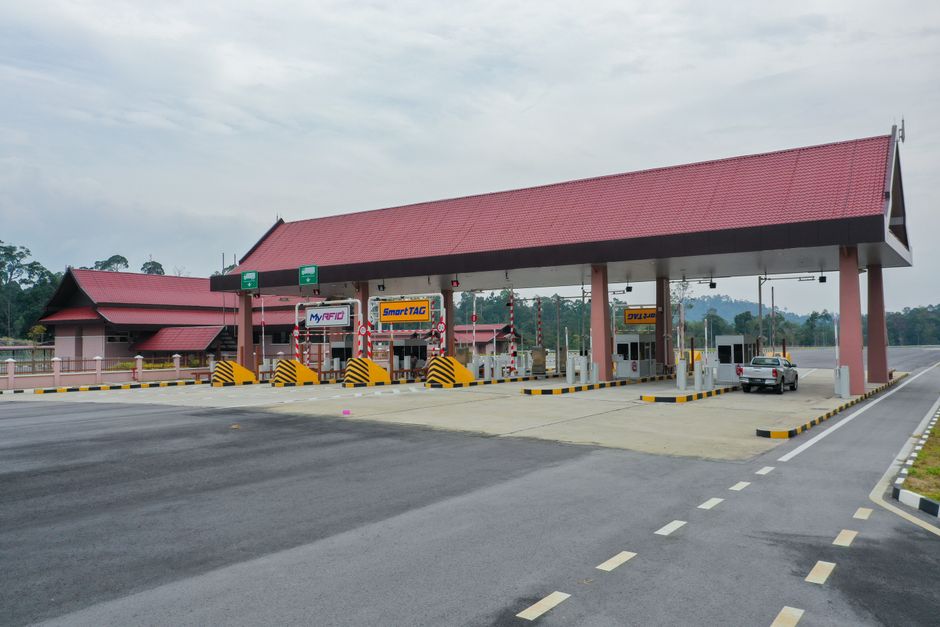
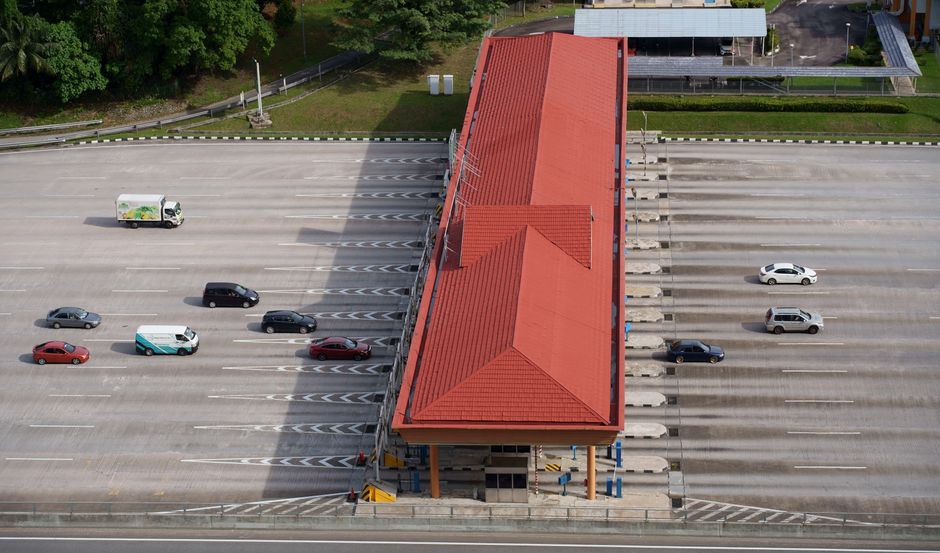
Malaysia has an extensive tolled expressway network. Most toll plazas now operate on an electronic-only or multi-lane free-flow (MLFF) basis, meaning cash lanes are increasingly rare. A Touch 'n Go (TnG) card is effectively essential for any road trip in Peninsular Malaysia.
Touch 'n Go cards can be purchased and topped up at petrol stations, convenience stores (7-Eleven, 99 Speedmart), and selected highway rest areas. They work across almost every toll plaza in Peninsular Malaysia. If you are renting a car, your operator may include a TnG card as part of the handover — check the listing's Important Notes section or ask the operator when you collect the vehicle.
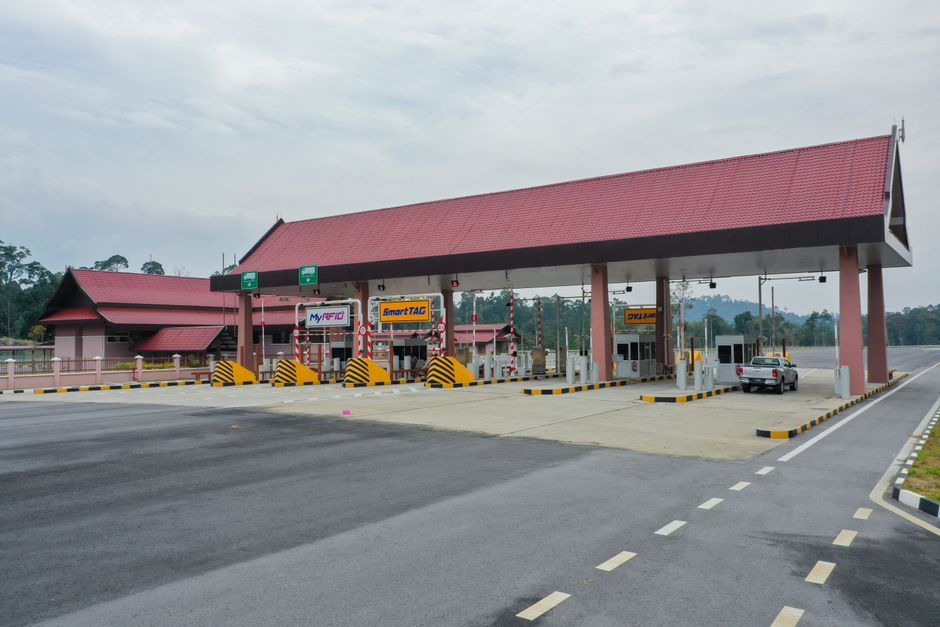
For a seamless toll experience, look out for lanes marked SmartTAG or RFID / myRFID. SmartTAG requires a transponder device fitted to the windscreen, which most rental cars do not carry. RFID (myRFID) is built into the toll infrastructure and reads a sticker fitted inside the windscreen — some rental cars are equipped with this. If your car has neither, use the Touch 'n Go card lane. When in doubt, look for the lane marked with the TnG logo and tap your card on the reader as you pass through.
Fuel: What to Put in the Tank
Malaysian petrol stations stock three main grades: RON 95 (the standard grade used by most cars), RON 97 (premium unleaded), and Diesel. RON 95 is price-controlled and widely available. RON 97 pricing fluctuates with the market. If you are unsure which grade your rental car takes, check the fuel cap or ask the operator at pick-up — putting the wrong fuel in is your liability, not the rental company's.
Most rental car agreements in Malaysia operate on a like-for-like fuel policy: you receive the car with a certain level of fuel and are expected to return it at the same level. Some operators use a full-to-full policy. The exact terms will be stated in your booking's Important Notes. Petrol stations are plentiful along major expressways and in all towns, so running low should rarely be a concern.
Navigation, Road Signs, and Parking
Road signage in Malaysia is bilingual — Malay and English — on major routes, making navigation reasonably straightforward for English-speaking visitors. Google Maps and Waze are the most widely used navigation apps in the country; both work well with Malaysian road data and are updated frequently. Waze in particular is popular among locals for real-time traffic and speed trap alerts.
A few useful Malay road terms to recognise:
- Lebuh raya — Expressway / Highway
- Jalan (Jln) — Road / Street
- Lorong (Lrg) — Lane / Alley
- Keluar — Exit
- Masuk — Entrance
- Berhenti — Stop
- Dilarang masuk — No entry
- Had laju — Speed limit
Street parking in cities is typically metered. Look for parking coupon systems (common in older town centres) or multi-storey car parks near shopping malls — rates are very affordable by international standards, usually RM1–4 per hour.
What to Know About Your Rental Car Pick-Up
MT Car Rentals operates on an area-based model: you can return your car to any listed location within the same area as your pick-up point, but not to a location in a different area. For example, if you pick up in Penang — whether at Penang International Airport or Butterworth KTM/ETS Station — you can return to any Penang-area location. You cannot, however, return a Penang rental to a Kuala Lumpur location.
At pick-up, your operator will ask to see your driving licence (and IDP if applicable). They will run through the car's condition, explain any operator-specific policies — such as mileage limits, prohibited destinations, or airport surcharges — and hand over the keys. Take a moment to photograph any existing marks on the vehicle before you drive off, and make sure you understand the fuel policy before you leave the lot.
Ready to explore Malaysia at your own pace? Browse rental cars by location at mtcarrentals.com and find the right car for your trip — from compact city runabouts to seven-seater MPVs for the whole family.